Do I Have Head Lice? 7 Signs to Look For & What to Do Next
Finding something suspicious in your child’s hair can make your heart drop. Is it dandruff? Dirt? A piece of lint? Or could it actually be head lice?
If you’re searching “Do I have head lice?” or “What does lice look like?”, you’re not alone. Head lice are common, particularly among school-aged children and their household members. And while discovering lice can feel overwhelming, the good news is that head lice are treatable and are not known to spread disease.
At Precision Lice Clinic in Vestavia Hills, Alabama, we help families throughout the Birmingham area identify and treat head lice with professional, thorough lice removal.
7 Signs You or Your Child May Have Head Lice
1. Itchy scalp
Itching is the most common symptom of head lice, although not everyone with lice will experience itching—especially during a first infestation. It can take several weeks for itching to develop after someone first gets lice.
If your child suddenly starts scratching their head frequently, particularly around the back of the neck or behind the ears, it’s worth taking a closer look.
2. You see something moving in the hair
Sometimes people describe the sensation as feeling like something is crawling or moving through their hair.
Adult head lice are small—approximately the size of a sesame seed—and can move quickly, which can make them difficult to spot.
If you see an actual crawling insect in the hair, that is a much stronger indication of an active infestation than simply finding white specks.
3. You find tiny eggs attached to the hair
Head lice eggs are called nits.
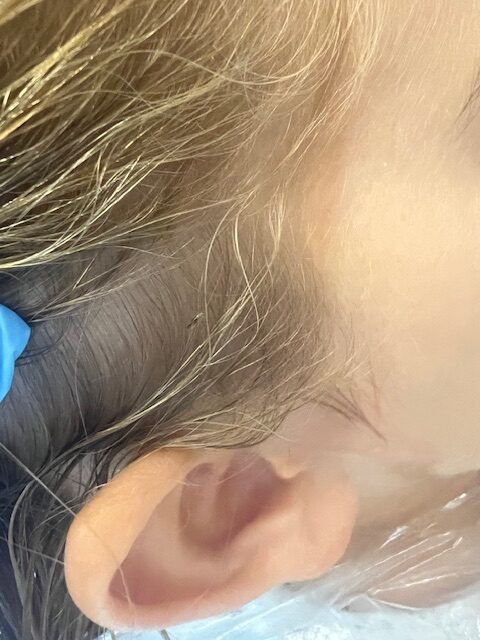
Nits are very small and are firmly attached to individual strands of hair. They are commonly found close to the scalp, particularly:
- Behind the ears
- Around the nape of the neck
- Near the hairline
- Close to the scalp
According to the CDC, finding live crawling lice is the best way to confirm an active infestation. Nits located within about ¼ inch of the scalp can also indicate an active infestation.
4. The “white or Black specks” won’t easily come off
One of the most common questions we hear at Precision Lice Clinic is:
“Is that lice or dandruff?”
Dandruff and other particles in the hair can easily be mistaken for nits.
One important difference is that nits are firmly attached to the hair shaft, while dandruff typically flakes or moves much more easily.
If you are having trouble determining what you’re seeing, a professional lice check can save you from hours of uncertainty.
5. Scratching has caused irritated spots
Repeated scratching can cause sores or irritation on the scalp. In some cases, those areas can become infected with bacteria normally found on the skin.
If your child has been scratching intensely and you notice sores, redness, or significant irritation, it’s a good idea to have the scalp evaluated.
6. Someone close to you recently had lice
Head lice primarily spread through direct hair-to-hair contact with someone who has an infestation. This can happen during activities that are especially common among children—playing together, sleepovers, sports, camps and other close-contact activities.
If your child has been exposed to someone with head lice, checking the entire household can be a smart precaution.
7. You simply aren’t sure what you’re seeing
This may be the biggest sign of all.
You don’t have to diagnose lice by yourself.
Misdiagnosis is common because lice and nits can be difficult to identify. The CDC recommends looking for live crawling lice or nits close to the scalp when examining for an infestation.
If you have looked through your child’s hair three times and still aren’t sure whether you’re seeing lice, it may be easier—and much less stressful—to have a professional check.
How to Check Your Child for Head Lice
If you want to check at home, use bright lighting and carefully separate the hair into small sections.
Pay particular attention to:
Behind the ears and at the nape of the neck.
These are common places to find lice and nits. A fine-toothed lice comb can also help you identify crawling lice.
If you find a live louse, don’t panic. Start by avoiding head-to-head contact and check other household members for signs of infestation.
What Do Head Lice Look Like?
Adult head lice are generally about the size of a sesame seed. They have six legs and can range in appearance from tan to grayish-white, sometimes appearing darker depending on the person’s hair.
Nits are much smaller. They are attached firmly to individual hair shafts and are often confused with dandruff or other debris.
One important distinction is that finding old nits does not necessarily mean there is an active infestation. Nits located farther than approximately ¼ inch from the scalp are often hatched or dead.
What Should I Do If I Find Lice?
First: Don’t panic.
Head lice are frustrating, but they are manageable.
If you find live lice, everyone in the household and other close contacts should be checked. Anyone with an active infestation should be treated according to the appropriate treatment method.
It’s also important not to spend hours trying to disinfect your entire house. Head lice survive only a short time away from the human scalp, and the CDC says extensive housecleaning is generally unnecessary.
Wash and dry recently used clothing, bedding and towels according to appropriate treatment guidance, and clean combs and brushes. Avoid using fumigant sprays or fogs, which are unnecessary and can be hazardous.
Professional Lice Treatment in Birmingham, Alabama
If you’re in Vestavia Hills, Birmingham, Mountain Brook, Homewood, Hoover, Cahaba Heights or the surrounding Birmingham area, Precision Lice Clinic is here to help.
Our goal is to make an experience that can be stressful for families feel simple, thorough and as comfortable as possible.
At Precision Lice Clinic, we provide:
- Professional lice checks
- Thorough lice treatment
- Full comb-out treatment
- Treatment for children and adults
- A private, spa-inspired environment
- Two weeks of unlimited checks and treatments with our treatment process
Instead of spending hours trying to determine whether those tiny white specks are lice eggs—or wondering whether you’ve successfully removed everything—our trained professionals can examine the hair and help you determine the next step.
Think You Found Lice?
You don’t have to spend the night Googling pictures of lice and wondering what you’re looking at.
If you think your child has head lice, let Precision Lice Clinic help.
We’re conveniently located in Vestavia Hills and serve families throughout the Birmingham area.
👉 Schedule a professional lice check or lice treatment with Precision Lice Clinic today.
Precision Lice Clinic
Professional Head Lice Treatment in Vestavia Hills, Birmingham & Surrounding Areas
Frequently Asked Questions About Head Lice
How do I know if I have head lice?
The best way to confirm an active head lice infestation is to find a live crawling louse or nymph. Nits close to the scalp can also indicate an active infestation.
Does head lice always itch?
No. Itching is common, but someone can have head lice without experiencing symptoms, particularly during a first infestation.
Can lice live in my house?
Head lice primarily live on the human scalp. They do not survive long away from a person because they need blood to live. The CDC recommends against extensive housecleaning or fumigating the home.
Can pets get head lice?
No. Head lice are human parasites. Dogs, cats and other household pets do not get or spread human head lice.
Can my child go to school if they have lice?
The CDC’s guidance is that children do not need to be sent home from school early solely because head lice are discovered. They can go home at the end of the day, begin appropriate treatment and return to school afterward.
Should I treat my child if I only find nits?
Not necessarily. The location and appearance of the nits matter. Nits found more than about ¼ inch from the scalp are often already hatched or dead. When you’re unsure, a professional lice check can help determine whether there is an active infestation.
What if I treated lice but I’m still finding nits?
Nits can remain attached to hair after treatment. Finding a nit does not automatically mean that treatment failed. Live crawling lice are more important when determining whether an active infestation remains.
Worried about lice? You don’t have to figure it out alone.
Precision Lice Clinic provides professional lice checks and thorough lice treatment for families in Vestavia Hills and throughout the Birmingham area.
Schedule your appointment today and get peace of mind.